ServicesGutters
Gutters in Neptune Beach, Sized and Hung for Heavy Rain
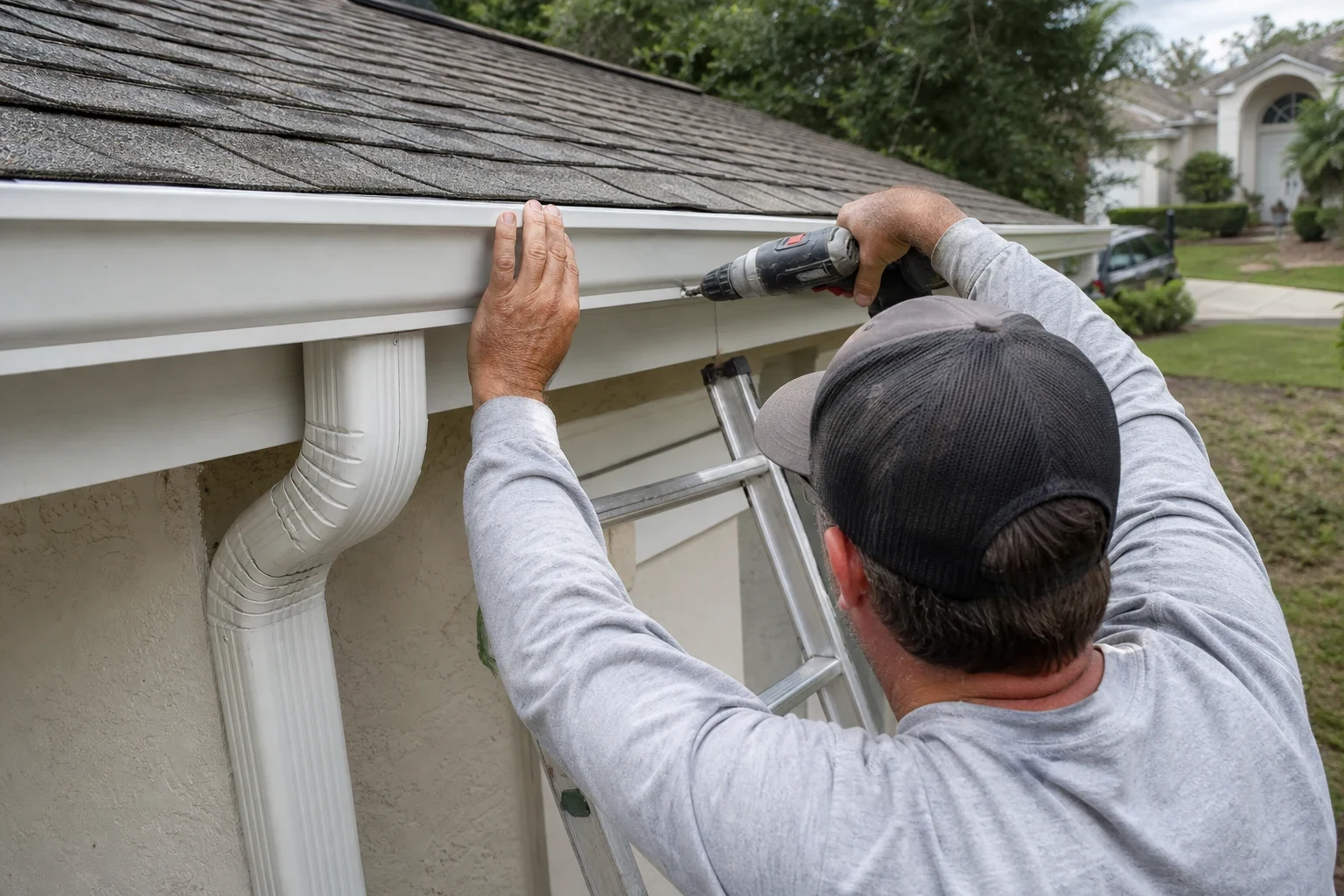
We install and replace gutters and downspouts formed in continuous runs, sized to the volume of rain each roof plane sends their way. We lay out the trade-offs between aluminum, copper and steel, then hang the system so water clears your home instead of soaking the fascia.
What a Gutter System Is Supposed to Do
A gutter collects the rain coming off your roof edge and channels it to an outlet, where the downspout carries it clear of your slab. If the gutter is too small, sagging or sloped the wrong way, water spills over the lip, works back behind the drip edge, and rots the fascia board and the decking along the eave.
Most of the problems we see come down to a few things: the wrong size for the roof area, fasteners and metal that corrode near the ocean, and downspouts too small or too few for a summer afternoon downpour. Choosing the material is part of fixing that, so we start there.
What Our Gutter Work Includes
- Aluminum runs formed at your home
- We roll each run from coil stock in our machine on site, so the only joints are at corners and end caps. We recommend .032-gauge aluminum over the thinner .027, because it resists dents from ladders and falling limbs and holds its line between hangers.
- Copper and steel options
- Copper lasts the longest in salt air and weathers to a brown, then green patina, but it costs the most. Galvanized steel is strong, yet the zinc coating wears through near the coast and rust starts at cut edges, so we explain that trade-off honestly before you pick it.
- Sizing: 5-inch or 6-inch, K-style or half-round
- We measure each roof plane and its pitch to figure how much water lands in each run. Steep or large planes often need 6-inch K-style gutters with 3x4 downspouts instead of the common 5-inch with 2x3 outlets.
- Hidden hangers and corrosion-resistant fasteners
- Hangers go roughly every two feet, screwed into the rafter tails or solid fascia, not just nailed into trim. We use stainless or coated screws and never pair copper with aluminum or steel parts, since dissimilar metals corrode each other where they touch.
- Fascia and drip edge check
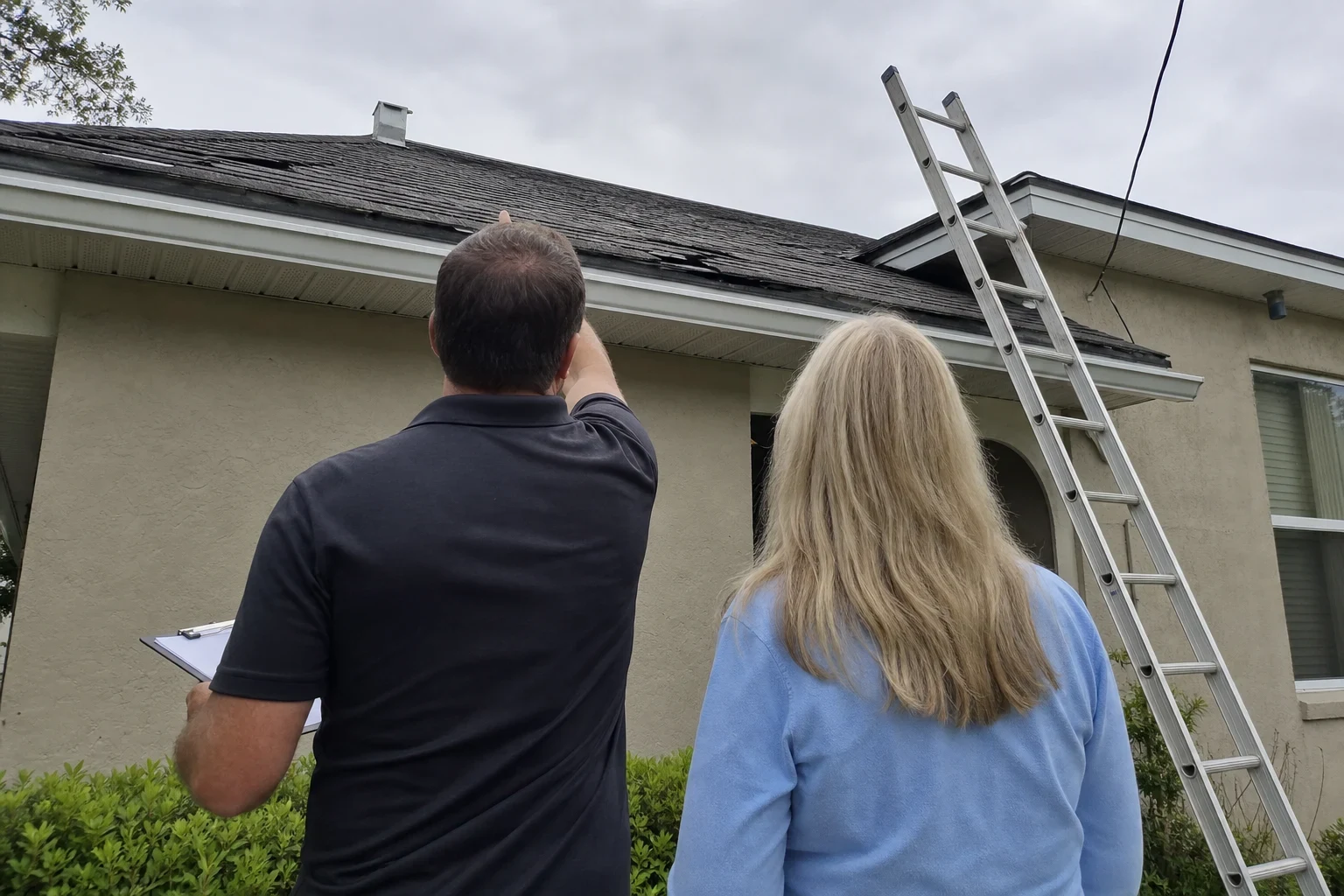
- During the estimate our technician presses into the fascia to find soft wood and confirms the drip edge sits over the back of the trough. Rotted boards are listed and priced up front, not found halfway through the job.
- Gutter guards, when they make sense
- Under oaks and pines, a micro-mesh guard keeps needles and leaves out of the trough. Where there is little debris, we will tell you a guard is not worth the cost.
Signs Your Gutters Need Attention
Water sheeting over the front edge
Overflow in a hard rain usually means the gutter is undersized, clogged, or pitched away from the downspout. Watch the next storm and note which runs spill.
Sagging runs or pulled hangers
Spikes and ferrules work loose as the wood behind them softens. Once a run dips, rainwater pools in the low spot, and that extra weight drags the section lower with every storm.
Paint peeling or dark stains on the fascia
That is water getting behind the gutter. Left alone, it rots the fascia and the edge of the roof decking.
White powder, pitting or rust
Salt air corrodes thin aluminum and galvanized steel, starting at seams and fastener holes. Pinhole leaks at the joints are the first stage.
Erosion or puddling at the foundation
Downspouts that empty right at the slab, or into a washed-out bed, are sending water where you least want it.
What Moves the Price of Gutters
Gutter cost is mostly material and footage, then whatever we find behind the old system. Your estimate lists those items separately so you can see each one. We also offer financing for gutter work.
Material and gauge
Copper costs far more than aluminum, and .032 aluminum runs a bit more than .027. Steel falls in between but may need replacing sooner near the coast.
Linear footage and stories
More eave length means more material. Second-story runs take more ladder setup and time.
Size and number of downspouts
Six-inch gutters and 3x4 downspouts use more metal, and each added outlet adds labor and parts.
Soft or rotted fascia
New hangers need sound wood to bite into, so any spongy board gets swapped out before the metal goes up. Because this is the line most likely to shift your total, our technician probes the fascia during the estimate instead of discovering it mid-job.
Guards and extras
Gutter guards, underground drain connections and custom corner work each add to the total.
How a Gutter Job Runs
- 1
Measure and talk materials
A technician measures the roof planes, eaves and downspout locations, checks the fascia, and walks you through aluminum, copper and steel for your home. You get a written estimate that lists footage, gauge, downspouts and any fascia work.
- 2
Remove the old system
We take down the old gutters and hangers, pull loose fasteners, and look over the fascia and drip edge once everything is exposed.
- 3
Form and hang
Each run is cut to exact length on site and hung with a gentle fall, about a quarter inch over every ten feet, so water moves toward the downspout. We seal the corners and end caps with a gutter-grade sealant.
- 4
Downspouts and water test
Downspouts are strapped to the wall and fitted with extensions or splash blocks to move water away from the foundation. We run a hose through every run to confirm it drains, then clean up all scrap and screws.
Gutter Questions We Hear
Is aluminum good enough this close to the ocean?
For most homes, yes, if it is .032 gauge with a baked enamel finish and stainless or coated fasteners. The finish protects the metal, and the heavier gauge holds up longer once salt starts to pit the surface. Copper outlasts it, but at a much higher cost.
How do you decide which gutter size my home needs?
We look at how many square feet of roof feed each run and how steep that section is. A big, steep plane can send more water than a 5-inch trough carries during a summer thunderstorm, while a small, low-slope side is fine with it. We measure at the visit and size each side of your home on its own.
Can you just repair a leaking section instead of replacing everything?
Often, yes. A failed corner seal or a loose hanger is a small fix. If the metal is corroded along the whole run or the system is undersized, patching just moves the leak, and we will tell you that plainly.
Do gutters affect my roof?
They do. When a gutter backs up, the overflow runs behind it and softens the fascia and the eave edge of the decking, which can turn into roof repair. If we see damage at the roof edge, we will point it out and you can decide what to do next.
How long does installation take?
Most homes are done in one day, including removal of the old system and cleanup. Fascia replacement or copper work can add time, and we let you know that when we estimate.
Get Gutters That Move the Water Away
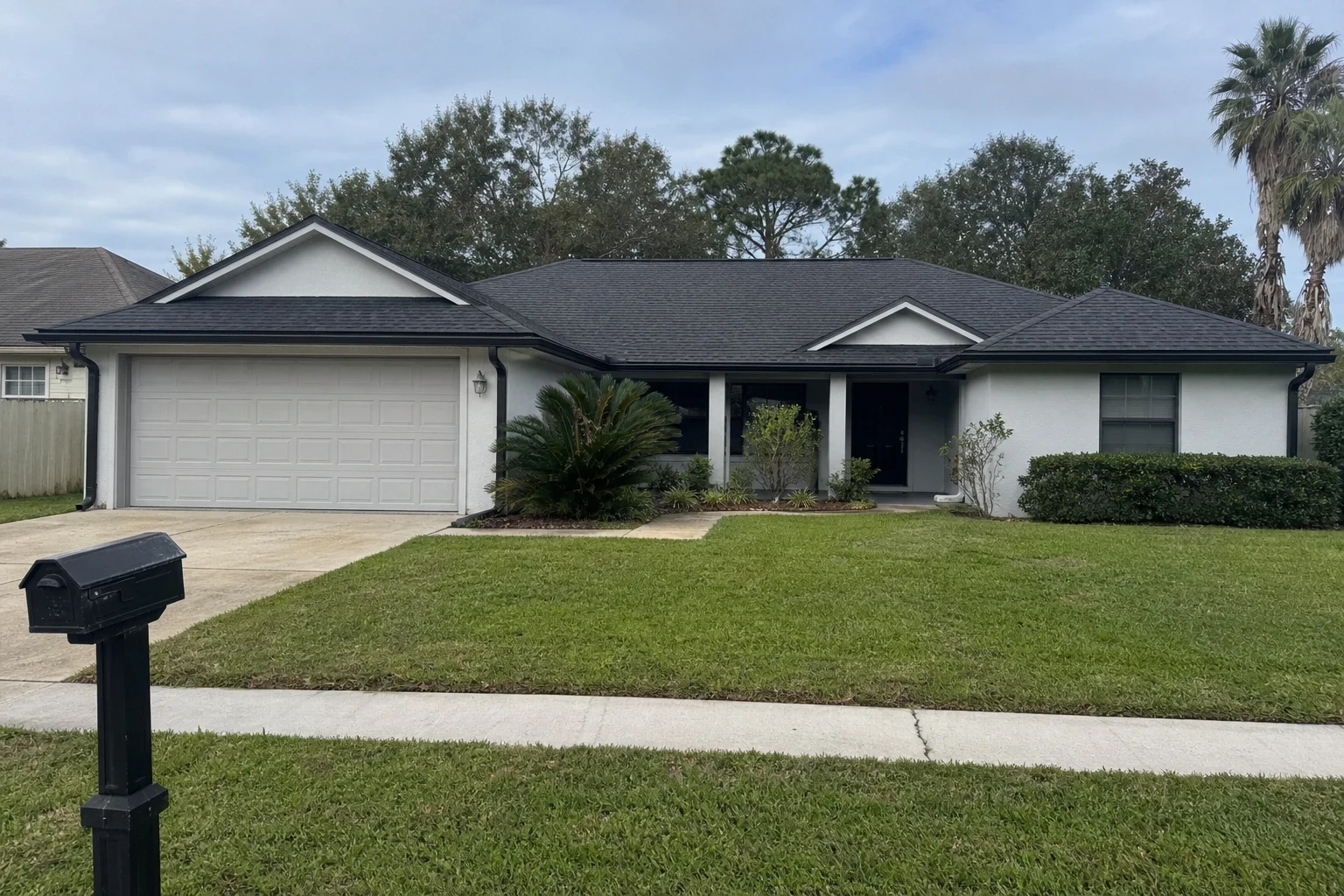
We will measure your roof, check the fascia and lay out your material options side by side. The estimate is free and carries no obligation.