ServicesRoof Replacement
Roof Replacement in Neptune Beach, With Every Option Laid Out
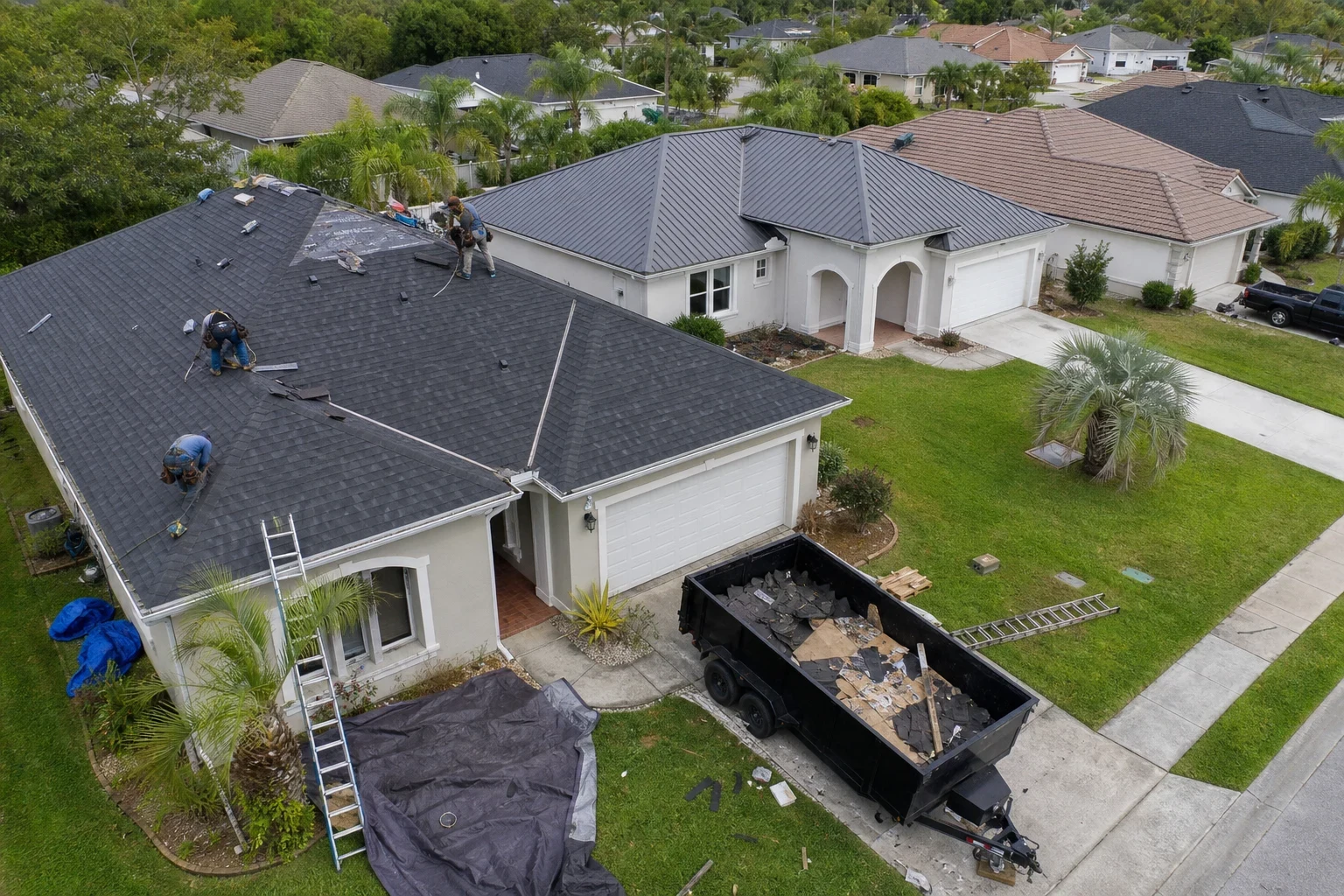
We strip your worn roof off to the sheathing, replace any decking that has gone soft and build the new roof in shingle, metal or tile. Before you pick one, we explain how each holds up to salt air, summer sun and coastal wind on your home.
When Replacing Beats Repairing
A new roof is the right call when the wear shows up on every slope, not in one corner. Granule loss across the whole field, underlayment that has turned brittle and decking that feels soft in more than one area can't be patched back to sound. Another repair at that stage just gets you to the next storm.
Close to the ocean, the first parts to give out are usually metal. Salt air eats through plain galvanized drip edge, pipe boot collars and exposed nail heads years before the shingles themselves are worn. A new roof is the chance to swap every one of those for corrosion-resistant flashing and fasteners rated for coastal exposure.
When your roof still has life in it, we say so and recommend roof repair. A new roof should fix a problem your roof actually has.
What Goes Into a New Roof
- Full tear-off to bare deck
- We remove all existing shingles and underlayment so the plywood or plank deck is fully exposed. Rot, delamination and old nail holes stay hidden until then, so that is when we look for them.
- Deck repair and re-nailing
- Soft or delaminated sheathing is cut out and replaced. We re-nail the deck to the current Florida Building Code pattern, because a tightly fastened deck is what keeps a roof attached in high wind.
- Underlayment matched to the covering
- We use synthetic or self-adhered underlayment depending on the roof type and slope. Self-adhered membrane closes around each nail shank, which counts most in valleys and at the eaves, where wind-driven rain can push water uphill.
- New flashing, boots and vents
- Drip edge, valley metal, wall flashing, pipe boots and ridge or off-ridge vents are all new. Reusing tired flashing under a fresh roof is the most common cause of early leaks.
- Shingle, metal or tile
- Architectural shingles, standing seam metal or concrete tile, fastened to the manufacturer's wind specs. Our metal roofing page covers panel profiles and coatings in more depth.
- Permit, inspection and cleanup
- We pull the permit, book the city inspection and run a magnet across the yard and driveway at the close of each work day to pick up stray nails.
Signs Your Roof Has Reached the End
Bald or curling shingles
Granules shield the asphalt from UV. Once they collect in the gutters by the handful, the mat dries out, curls and cracks, and the seal strip stops holding the shingle down in wind.
Stains in several rooms
A single ceiling stain usually traces back to one failed part. Stains in different rooms suggest the underlayment itself is worn out.
Soft decking
If the roof flexes under a technician's boots, the plywood has soaked up water for months and lost its stiffness. That sheathing needs replacing, and the covering over it comes off too.
Rusted flashing and fasteners
Orange streaks under vents or along the drip edge mean the metal is corroding through. Swapping only the shingles around it rarely lasts.
A new patch after every storm
When each storm means another repair, the shingles are losing their bond to each other. A roof inspection can tell you whether the seal strips are still holding.
How a Replacement Job Runs
- 1
Visit and options talk
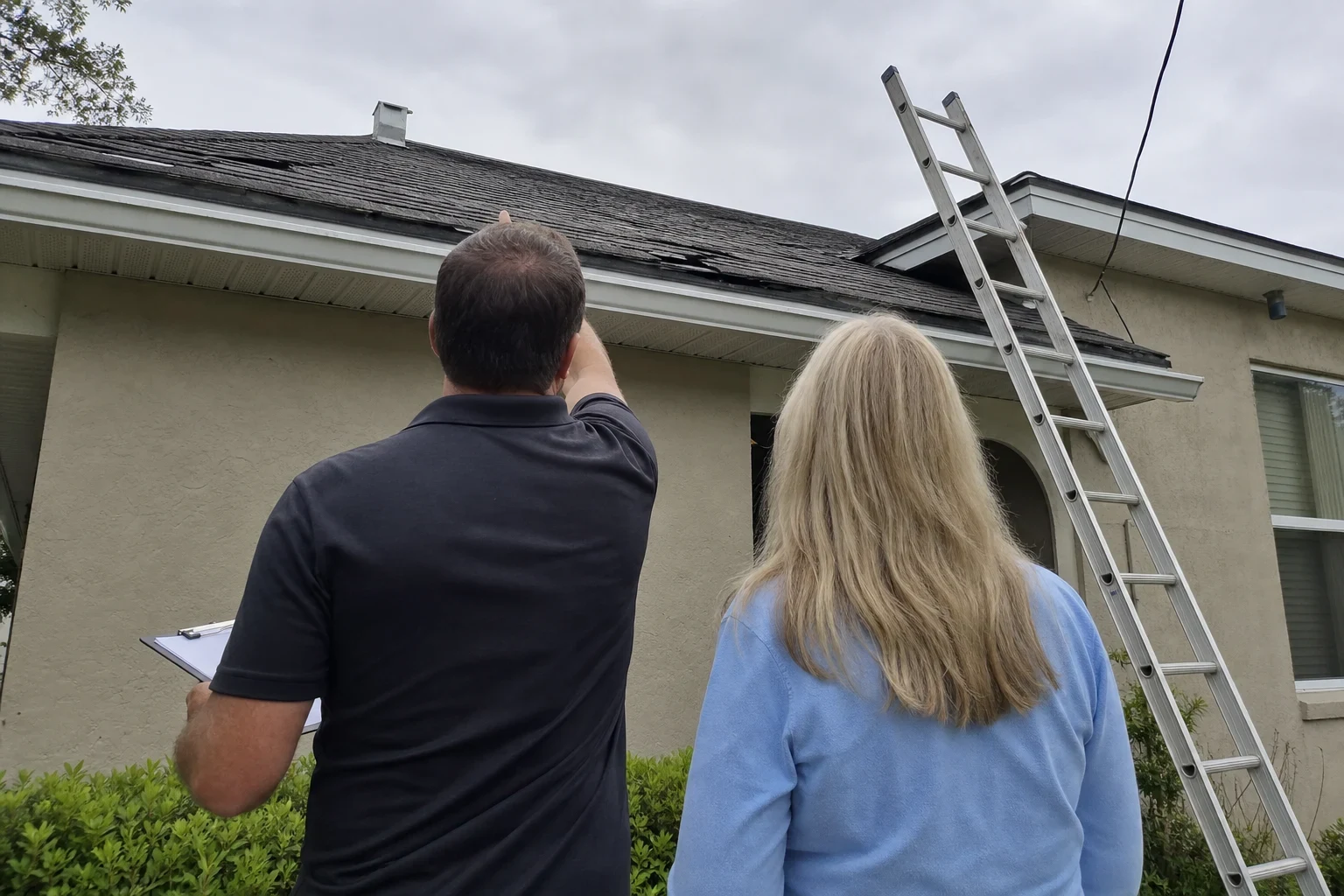
A technician measures the roof, checks the deck from the attic side and photographs what is failing. Then we compare shingle, metal and tile side by side, including what each costs over its life and how it handles salt and wind.
- 2
Written estimate and permit
You get a line-item estimate covering strip-off, expected deck work, underlayment, flashing and the new covering. Once you approve it, we file the permit and set a start date.
- 3
Strip-off and dry-in
Tarps go over plants and along walls, and we open one section at a time so no part of your home sits uncovered longer than it has to. Each section gets underlayment the same day it is opened.
- 4
Install and final inspection
The covering, flashing and vents go on, and the city inspector signs off. We walk the finished roof with you and show photos of the deck before it was closed up.
What Moves the Price of a New Roof
Most of the price comes from roof size, the covering you choose and what shows up under the old roof. We can't see the deck until it is exposed, so the estimate prices deck repair per sheet, and you can check that line against the final bill. Financing is available if you would rather spread the cost out.
- Roof area and slope
- We measure in squares, each one covering 100 square feet of roof surface. A steep slope calls for more fall-protection rigging and slows every step of the job.
- Covering type
- Architectural shingles cost the least up front. Standing seam metal and concrete tile cost more to install but last longer, and tile may need an engineer's review because of its weight.
- Deck condition
- Each rotted sheet adds plywood and labor. Roofs with a history of leaks usually need more of it.
- Old layers and penetrations
- Removing two old shingle layers adds hours of strip-off and more dumpster loads. Skylights, chimneys and extra vents each need their own flashing.
Roof Replacement Questions
Something not covered here? (904) 406-7271
Which roof type lasts best this close to the ocean?
Metal and concrete tile both outlast asphalt shingles in salt air when the right parts go with them. For metal near the water we lean toward aluminum or heavily coated steel, since cut edges on standard steel can rust. Shingles remain a sound budget choice as long as the flashing and fasteners are corrosion-resistant.
Can you put new shingles over my old ones?
We don't. A second layer hides the deck, so any rot or loose sheathing stays trapped under the new roof. Stripping to the deck also lets the new shingles lie flat and seal the way they are designed to.
How long will the work take?
Most shingle replacements on a typical single-family home take one to three working days. Metal and tile take longer. Every section is dried in the day it is opened, so your home is never left open overnight.
Does homeowners insurance cover roof replacement?
It depends on why the roof failed. Wind or hail damage from a covered event may be paid in part or in full under your policy, while age and ordinary wear generally are not. We work directly with your insurance adjuster on storm damage claims and can share our photos and measurements. Our storm damage repair page walks through how a claim moves along.
Do I need to stay home while you work?
You don't have to be there all day. It helps if you're around on the first morning so we can confirm the plan, and again for the final walk-through. During strip-off, keep cars clear of the driveway and pets indoors.
Compare Your Options Before You Commit
A technician will measure your roof, check the deck from the attic and go over shingle, metal and tile with their trade-offs. The estimate is free and carries no obligation.