ServicesStorm Damage Repair
Storm Damage Repair in Neptune Beach
After a storm, we check your roof according to its material: lifted shingle tabs, loosened metal fasteners, cracked tile and bent flashing. You get photos of every finding and a repair that matches what is already on your home.
What storm damage repair covers
Storm damage is rarely one big hole. Wind gets under the edge of a roof and works on it. On asphalt shingles it breaks the sealant strip that bonds each course to the one below, so a shingle can look flat and still be loose. On metal it flexes panels until fasteners back out or clips shift. On tile it lifts, cracks or slides pieces out of their setting. Flying debris adds punctures and dents on top of that.
Our job is to find each of those failures, tell you which ones let water in now and which ones will later, and repair them with products that behave like the rest of your roof. Coastal storms here bring sustained wind and sideways rain, so damage at the eaves, rakes and ridge gets the closest look.
When damage is spread across too much of the roof for a sound repair, we say so and explain why. Our roof replacement page covers that route.
What the work includes
- Shingle reseal and replacement
- Creased or lifted shingles are replaced, not glued back down. A crease means the mat has fractured and the shingle will not hold its seal again. We hand-seal the new courses and nail them on the manufacturer's nail line.
- Metal panel and fastener repair
- On exposed-fastener panels we replace backed-out or stripped screws with oversized fasteners and new neoprene washers. On standing seam we check clips and reseat or replace panels that pulled loose.
- Tile and ridge work
- Cracked or slipped tiles are pulled, the underlayment beneath is checked, and replacements are set to match the existing attachment method. Hip and ridge pieces get the same treatment.
- Flashing, vents and drip edge
- Bent drip edge, lifted step flashing and damaged vent boots are common entry points after wind. We replace them rather than caulk over them.
- Decking and underlayment
- Where water got through, we open the area and test the plywood or OSB for softness. Wet or delaminated sheathing is cut out and replaced before new underlayment goes down.
- Temporary dry-in
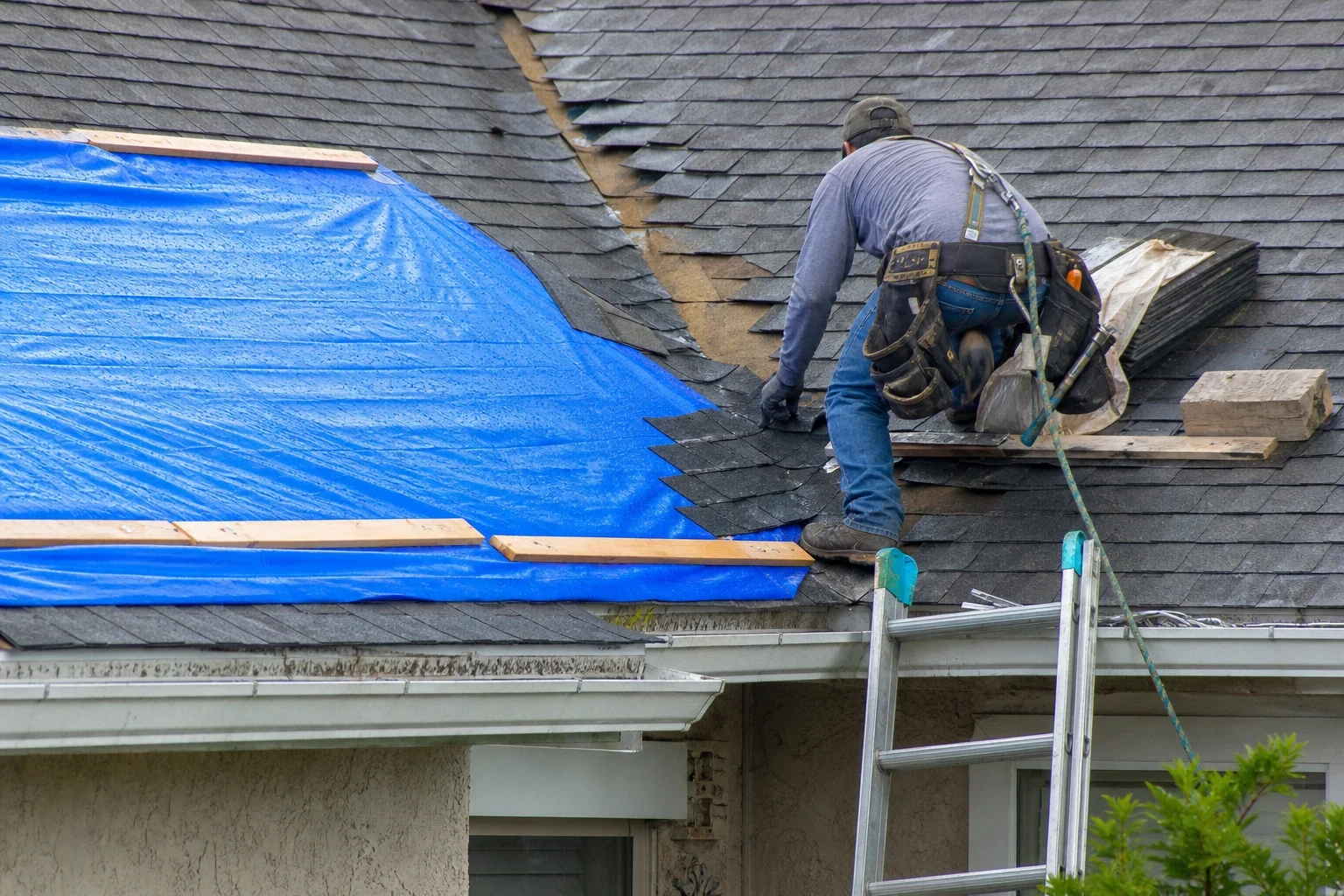
- If a section is open and parts need to be sourced, we cover it with secured tarp or synthetic underlayment so your home stays dry until the permanent repair.
Signs your roof took storm damage
Granules in the gutters
A sudden pile of shingle granules at downspouts means wind or debris scrubbed the surface. Exposed asphalt breaks down quickly in sun.
Shingles on the lawn
Even one missing shingle leaves the nails and seams of the course below exposed. Neighboring shingles have usually lost their seal too.
Lines or creases across shingles
A horizontal crease near the top of a tab shows the shingle folded back in the wind. It may look fine from the ground but it no longer seals.
Rattling or lifted metal
Panels that tick or rattle in a breeze have loose fasteners or clips. Water follows the screw hole once the washer stops sealing.
New ceiling stains or attic drips
Water marks that appear after a storm point to a breach above. Check the attic decking with a flashlight for dark, damp spots.
Why storm repair prices vary
We price a storm job only after the inspection shows what actually failed. Two houses on one street can need very different work, depending on the roof covering and how far water traveled under it. With a claim, your deductible and the adjuster's decision set your out-of-pocket share. Financing is available for whatever part falls to you.
Roof material
Asphalt shingle repairs are usually the simplest. Tile needs careful handling to avoid cracking neighbors, and metal panels may need to be ordered to match profile and gauge.
Matching what is already up there
Discontinued shingle lines or older tile profiles take time to source. A close match costs more than an off-the-shelf piece, and we tell you how close we can get before work starts.
Decking damage
If water soaked the sheathing, the repair grows from surface work to cutting out and replacing plywood. That is only known once the area is opened.
Extent and code requirements
Building code limits how much of a roof can be patched before a larger section must be brought up to current standards. Widespread damage can push a job past that line.
Pitch and access
Steep slopes and second-story eaves need more safety setup and slower work, which adds labor time.
How a storm repair runs
- 1
Free post-storm inspection
A technician walks the roof, checks the attic where it can be reached, and photographs each finding by location. You see the same pictures we do.
- 2
Written scope
You get a list of what failed, why, and what each repair involves. Your free, no-obligation estimate lays out the parts and labor line by line.
- 3
Working with your adjuster
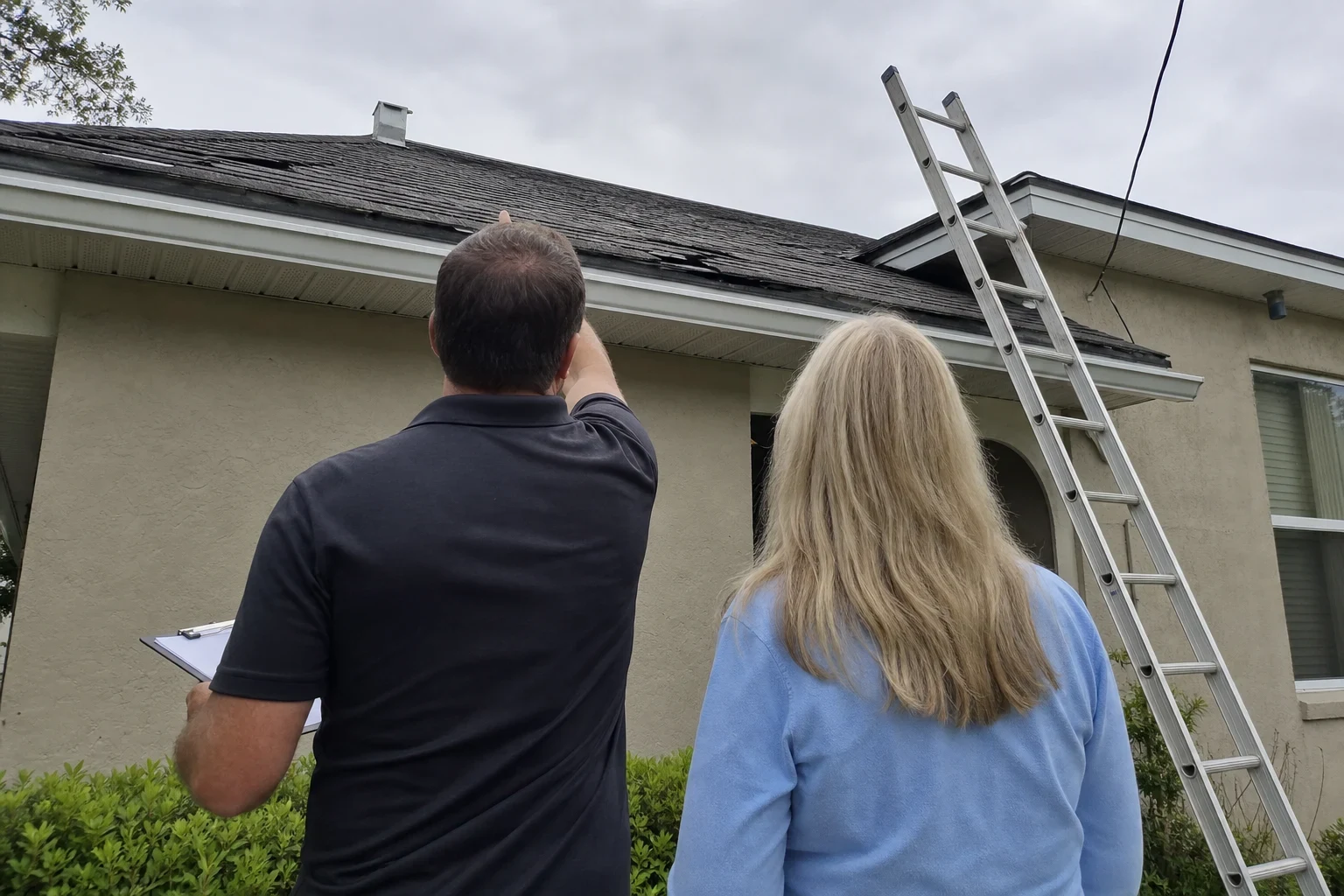
Once your claim is open, we deal with the adjuster on your behalf, meeting them on the roof when that helps and handing over our photos and measurements. Coverage is the adjuster's call; our part is making sure nothing is left undocumented.
- 4
Permit and repair day
We pull any permit the work requires, protect landscaping and the driveway, then strip the damaged shingles, panels or tile, repair the deck and install the new components.
- 5
Cleanup and walkthrough
We sweep the yard with a magnet for nails, haul off debris and show you the finished work with after photos.
Storm damage repair questions
Will my homeowners insurance pay for the repair?
Coverage comes down to the wording of your policy, the size of your deductible and the adjuster's findings. Wind and debris damage is commonly covered, while wear and age usually are not. We document the damage clearly so the adjuster has what they need, but the coverage decision is theirs.
Do you deal with the adjuster, or do I?
You file the claim, and we work directly with your adjuster from there. We can meet them on the roof, walk through our photos and explain how each item failed. You stay informed at every step.
Can you match my existing shingles or tile?
Often yes, but sun-faded roofs drift in color and some product lines are no longer made. We bring samples or photos so you can compare before anything is installed. If the nearest available product would stand out on the side of the house facing the street, we talk through alternatives, such as moving original shingles or tile from a rear slope to the front and using the new material where it is out of sight.
Is it safe to go up and look myself?
We advise against it. Wet shingles, loose tile and lifted metal are slippery and can shift underfoot. Look from the ground with binoculars and check the attic, then let a technician handle the roof.
When should a storm repair become a new roof?
When damage covers enough of the roof that code requires a larger section to be redone, or when the existing shingles or tile are too brittle to work without breaking more of them. We show you the evidence either way and price both if it is close.
Get your roof checked after the storm
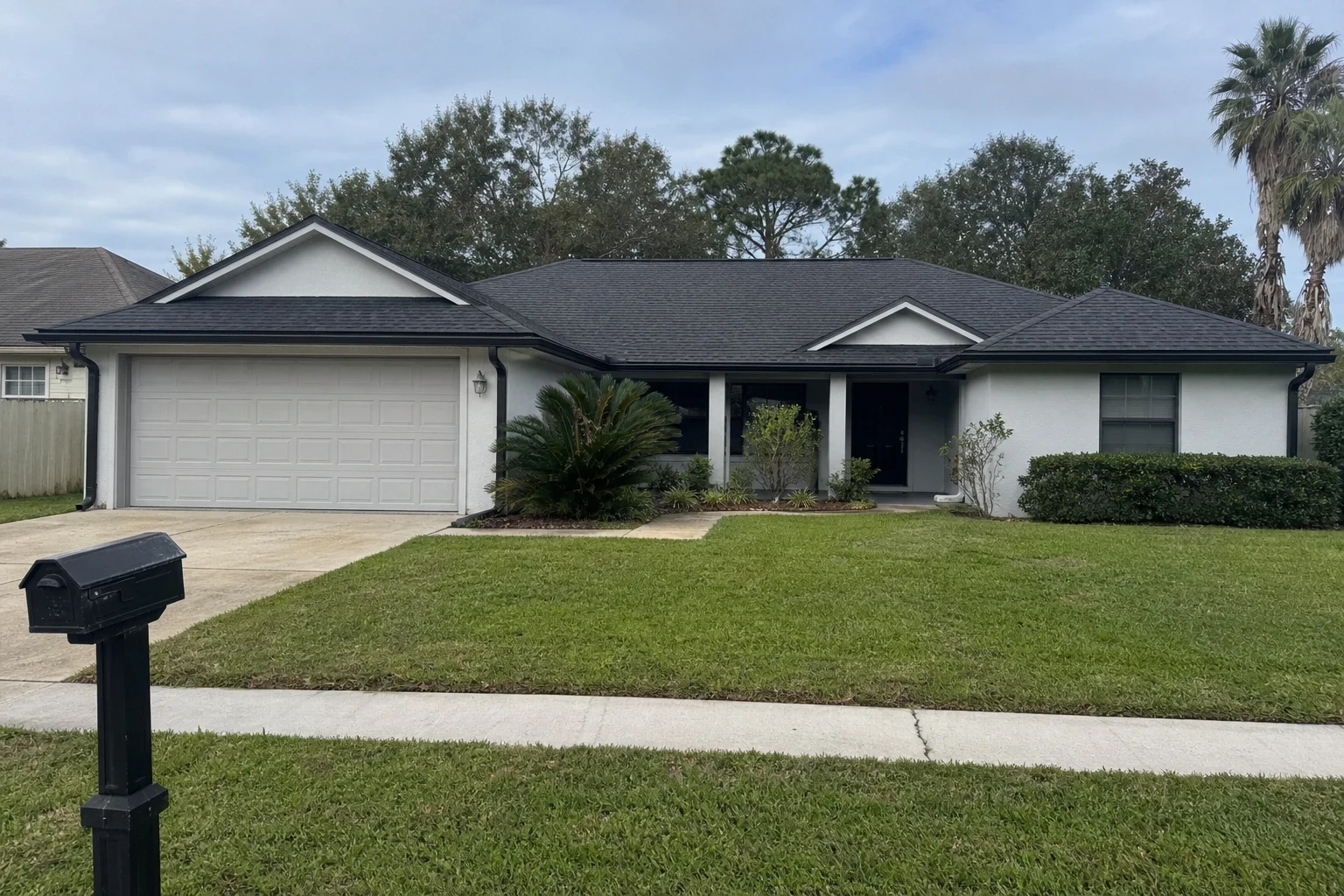
A technician will look at every slope, photograph what the wind and debris did, and explain the repair in terms of your roof's material. The inspection is free, and the estimate comes with no obligation.