ServicesMetal Roofing
Metal Roofing in Neptune Beach, Matched Panel by Panel to Your Home
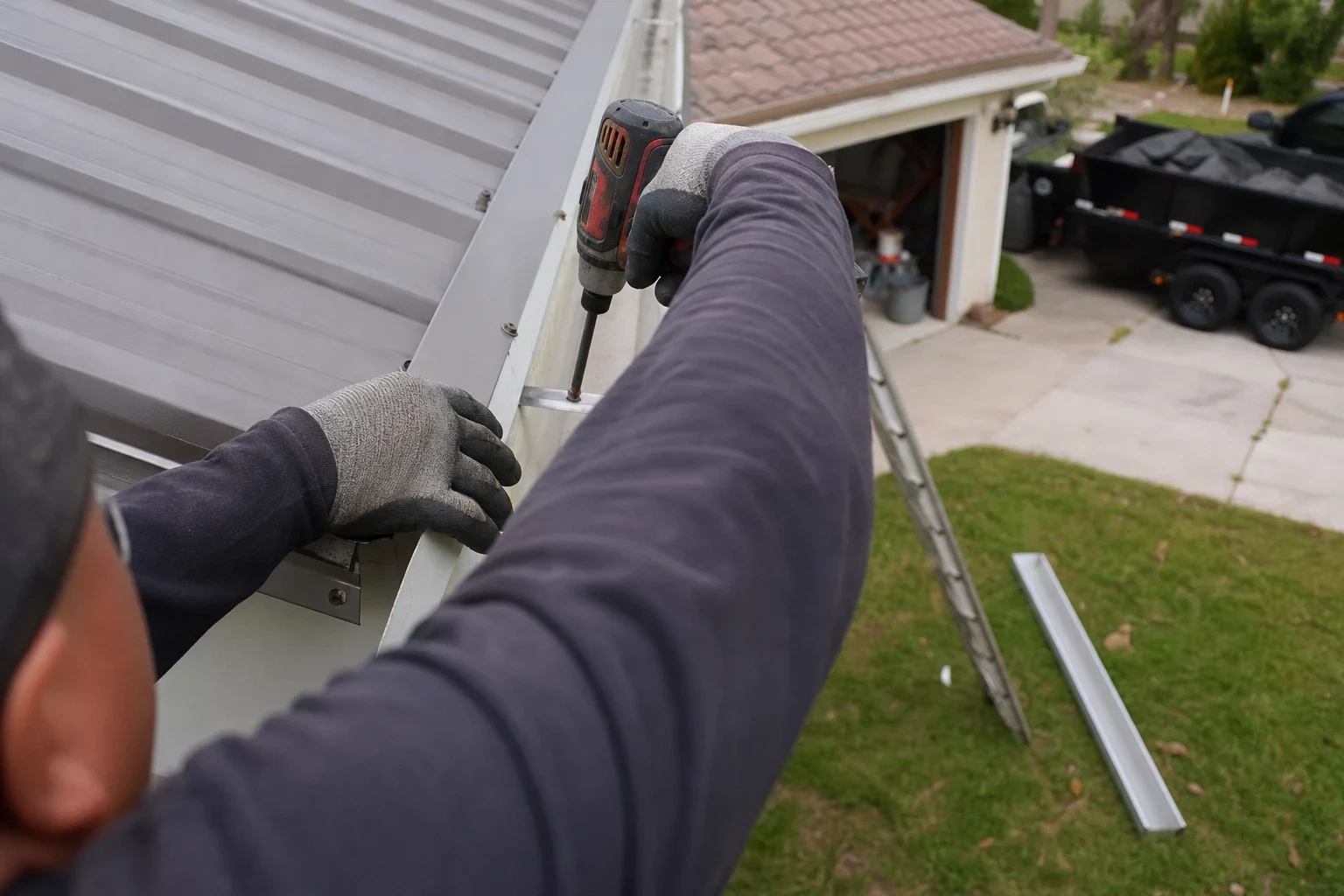
We install standing seam and 5V crimp metal roofs and explain the trade-offs before you choose: steel or aluminum, concealed or exposed fasteners, which finish holds its color. You get a roof fastened to current wind requirements and an estimate that names every material.
What a Metal Roof Is, and When It Makes Sense
A metal roof is a system, not just sheets of panel. Underneath sits a high-temperature underlayment rated for the heat metal builds up, then clips or screws, then trim at the eaves, rakes, ridge and walls. Each part has to suit the panel above it, and most metal roof leaks we see start at trim and flashing, not in the flat of the panel.
Metal tends to pay off if you expect to own your home for a long stretch, if wind keeps tearing tabs off your shingles, or if you want a lighter roof that throws back more sun. The up-front cost runs higher than architectural shingles. If your current roof only needs roof repair, we will tell you that instead.
Material choice matters more here than inland. Close to the ocean, salt spray settles on the roof and works into scratches and cut edges, so we look at your distance from the water before recommending steel or aluminum.
What Our Metal Roofing Work Includes
Panel style recommendation
Standing seam hides its fasteners under raised seams and lets the panel expand and contract on clips. 5V crimp and similar exposed-fastener panels cost less but rely on rubber washers that age in the sun and need periodic checking. We explain both on your roof, not in general.
Steel or aluminum, chosen by exposure
Galvalume steel carries an aluminum-zinc coating and performs well on most homes. Aluminum does not rust, which is why we often suggest it for homes nearest the beach. We also check gauge, since a 24-gauge panel resists denting and oil-canning better than a thinner one.
Finish selection
PVDF finishes, often sold as Kynar 500, hold color and resist chalking far longer than standard polyester paint. Lighter colors reflect more heat away from the attic.
Tear-off and deck repair
We remove the old roof, replace soft or delaminated plywood, and secure the deck to the attachment the current Florida Building Code calls for on a reroof.
Flashing and trim made to fit
Pipe boots, wall flashing, valleys and ridge closures are matched to the panel profile. We keep copper and lead away from steel, because dissimilar metals in contact corrode each other.
Permit and cleanup
We pull the permit, schedule the inspections, and sweep the yard and driveway with a magnet for screws and metal shavings before we leave.
Signs a Metal Roof May Be Worth a Look
Shingles lifting after every blow
When tabs keep tearing loose, the sealant strips have often aged out. Metal panels locked at the seams resist that kind of uplift.
An attic that stays hot into the evening
Dark shingles store heat and release it into the attic for hours. A reflective metal finish over a vented ridge can lower that load.
Rust streaks on an existing metal roof
Red streaks near screws or cut edges mean the coating has failed there. Sometimes that is a repair; on older Galvalume near the water it can mean the panels are near the end.
Backed-out screws and worn washers
Exposed-fastener roofs loosen as panels heat and cool. Gaps at the screw heads let water track into the deck.
Your shingle roof is due anyway
If you are already facing roof replacement, it is the cheapest moment to compare metal, because the tear-off is happening either way.
How a Metal Roof Job Runs
- 1
Technician visit and measurements
We measure the roof, check the deck from the attic, and note your exposure to salt air. Then we walk you through panel, metal and finish options with the cost difference between them.
- 2
Written estimate and permit
You get a line-item estimate that lists the panel, gauge, finish and underlayment by name. Once you approve it, we file the permit with the product approvals for the panel system.
- 3
Tear-off, deck and dry-in
We strip the roof one section at a time, repair the deck, and install underlayment so your home is dry at the end of each day.
- 4
Panels, trim and inspection
Panels go on with clips or screws spaced to the manufacturer's wind design, followed by ridge, rake and eave trim. After the final inspection we walk the roof with you and show you photos of what went under the panels.
What Moves the Price of a Metal Roof
Metal pricing depends on the panel system first and the roof itself second. Two homes of the same size can land far apart because of slope, cut-up roof lines and what we find under the old covering. We price every item in writing, and financing is available.
- Panel type and metal
- Standing seam takes more material and labor than 5V crimp. Aluminum costs more than Galvalume steel, and a heavier gauge adds cost too.
- Roof shape
- Every hip, valley, dormer and skylight needs custom-bent trim and careful cutting. A simple gable goes faster than a roof with many planes.
- Deck condition
- Rotted plywood found during tear-off is replaced sheet by sheet. We photograph it and show you before adding it to the bill.
- Finish and color
- PVDF finishes cost more than polyester paint, and some colors carry an upcharge from the supplier.
What Homeowners Ask Before Choosing Metal
Something not covered here? (904) 406-7271
Will rain sound louder on a metal roof than on shingles?
Over a solid plywood deck with underlayment and attic insulation, most people notice little change from shingles. The drumming metal roofs people picture are usually panels fastened over open purlins on barns and sheds. We install over a solid deck, which absorbs most of that sound.
Will salt air rust a metal roof?
It can, if the material does not suit the exposure. Galvalume works well on many homes, but cut edges and scratches are where salt starts its damage. For homes closest to the beach we usually recommend aluminum, and we explain why on the visit.
Can you put metal over my existing shingles?
We generally recommend tearing off the old roof. That lets us replace rotten decking, secure the deck to current code and install the right high-temperature underlayment. Laying metal over shingles hides problems you would want found.
How does a metal roof hold up in hurricane winds?
Wind performance comes from the whole system: panel profile, clip or screw spacing, deck attachment and trim fastening. Every panel we install carries a Florida product approval, and we fasten it the way that approval specifies.
Do you help with insurance if storm damage leads to a metal roof?
Yes. The first step can be a free post-storm inspection, where we photograph and measure the damage. When your claim is open, we meet and talk with the adjuster your insurer sends, so the damage gets documented accurately; the adjuster still makes the coverage decision. Your policy usually pays to restore what you had, so any upgrade to metal is a separate cost we spell out.
Compare Steel, Aluminum and Panel Styles on Your Own Roof
We will measure, look at your deck from the attic and lay out each metal option with its trade-offs. The estimate is free and carries no obligation.